

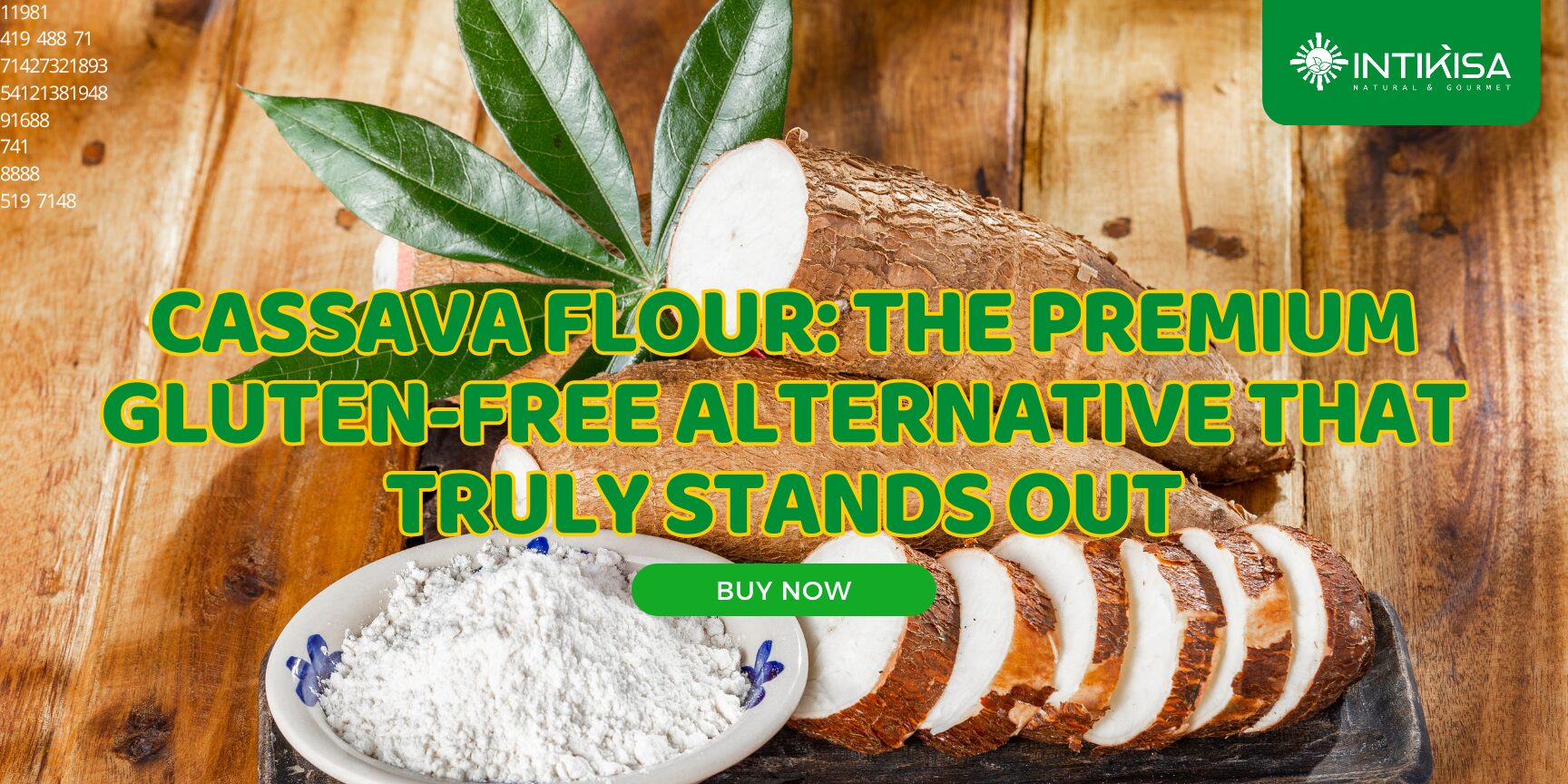
Cassava flour is rapidly becoming one of the most complete and reliable options in the gluten-free and grain-free world. From a culinary, functional, and nutritional standpoint, this ingredient offers advantages that few root- or cereal-based flours can match.
In this analysis, we address the key questions that informed consumers typically ask before choosing a healthy flour for their daily cooking.
- What is cassava flour and why is it a strong gluten-free alternative?
Cassava flour is made from the entire Manihot esculenta root, which is peeled, washed, dehydrated, and finely milled. Unlike tapioca starch, cassava flour retains the fiber and full structure of the tuber, giving it broader functionality.
It is naturally gluten-free, non-GMO, and fits clean label standards. Its content of resistant starch contributes to more stable gluten-free doughs, avoiding the gritty texture common in other alternative flours.
Keywords: cassava flour, yuca flour, gluten-free flour, clean label, wheat-free flour.
- Is cassava flour truly grain-free and suitable for paleo or Whole30 diets?
Yes. Being a root, cassava contains no grains at all—no wheat, oats, rice, or derivatives.
This makes it fully compatible with paleo, Whole30, AIP (Autoimmune Protocol) and anti-inflammatory eating patterns.
Its moderate glycemic impact and simple composition also appeal to consumers seeking minimally processed ingredients.
Keywords: grain-free flour, paleo flour, Whole30 flour, root-based flour.
- What are the benefits of using 100% natural cassava flour in daily cooking?
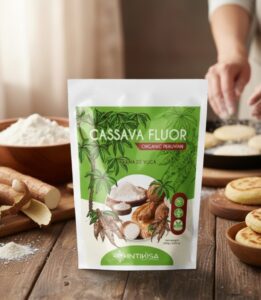
When working with a 100% cassava product like Intikisa’s flour, you get clear functional advantages:
- Uniform texture: fine milling supports smooth, consistent doughs
- High absorption: improves stability without complex flour blends
- Fiber + resistant starch: supports digestion and gut health
- Clean flavor: doesn’t interfere with delicate recipes
- Versatility: ideal for baking, pastries, doughs, and thickening
These qualities make it a top choice among culinary professionals in the gluten-free segment.
Keywords: cassava flour benefits, Intikisa cassava flour, natural flour.
- How does cassava flour perform in bread, pastries, and gluten-free baking?
Testing consistently shows that cassava flour delivers superior gelatinization and moisture retention compared to many gluten-free flours. This results in:
- Softer crumb
- More uniform crusts
- Better elasticity
- Less cracking in dough
In pastries, it performs exceptionally well in muffins, cakes, brownies, and cookies, maintaining structure, volume, and moisture.
Keywords: gluten-free baking, bakery gluten-free, cassava flour performance.
- What recipes work best with cassava flour—tortillas, pancakes, breads, or cookies?
Its technical behavior makes it ideal for preparations that require natural flexibility and stable texture:
- Tortillas: soft and flexible, no gums needed
- Pancakes: lighter, fluffier structure
- Artisanal breads: enhanced moisture retention
- Cookies: smooth texture without grittiness
Cassava flour is one of the few gluten-free flours that can act as an all-purpose substitute with consistent results.
Keywords: all-purpose gluten-free flour, cassava flour recipes, yuca flour tortillas.
- Does cassava flour affect the flavor of recipes, or is it neutral?
Cassava flour is known for its neutral flavor profile—no earthy, bitter, or sweet off-notes.
This clean taste allows recipes to maintain their original character, a key advantage for professional baking and product development.
Keywords: flavor-neutral flour, cassava flour, yuca flour.
- Why is cassava flour easy to digest and a lighter option for cooking?
As a root rich in long-chain starches and soluble fiber, cassava flour is typically easier to digest than grain- or legume-based flours.
It also contains resistant starch, associated with:
- Improved gut health
- Better satiety
- More stable glucose response
Properly processed cassava is gentle on digestion and suitable for people with sensitivities.
Keywords: cassava flour benefits, healthy flour, digestive-friendly flour.
- How do you use cassava flour in healthy recipes without complicating things?
A major advantage is that cassava flour does not require blending with other flours to work well.
It can often replace wheat flour 1:1, with only slight hydration adjustments.
Recommended uses:
- Homemade bread
- Healthy desserts
- Gluten-free breading
- Sauces and soups as a thickener
- Flexible tortillas and doughs
Keywords: healthy cassava flour recipes, Intikisa cassava flour.
- What are the advantages of a flour that is additive-free, grain-free, and gluten-free?
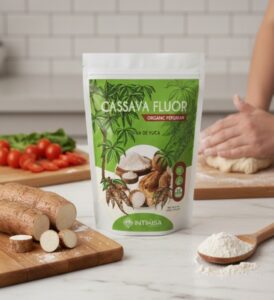
A clean, simple ingredient offers clear benefits:
- Better digestive tolerance
- Lower allergy risk
- Suitable for therapeutic diets
- Transparent nutritional profile
- Minimal processing
For consumers and brands seeking trustworthy ingredients, cassava flour stands out naturally.
Keywords: grain-free flour, clean label, gluten-free flour.
- Why is Intikisa’s cassava flour an ideal option for healthy recipes?
Because it offers the perfect balance of culinary performance, natural quality, and consistency.
Intikisa’s cassava flour is 100% root, additive-free, and finely milled to support both home cooking and more technical recipes.
It aligns with the global movement toward clean label foods, higher ingredient standards, and gluten-free, grain-free, minimally processed alternatives.
Keywords: Intikisa cassava flour, premium yuca flour, healthy recipes.
Conclusion
Intikisa’s cassava flour is more than a gluten-free product—it’s a high-performance ingredient with professional-level versatility.
For bread, pastries, doughs, sauces, or healthy cooking, it offers a rare combination: functionality, neutral flavor, and reliable behavior that surpasses many conventional gluten-free flours.





 English
  Spanish