

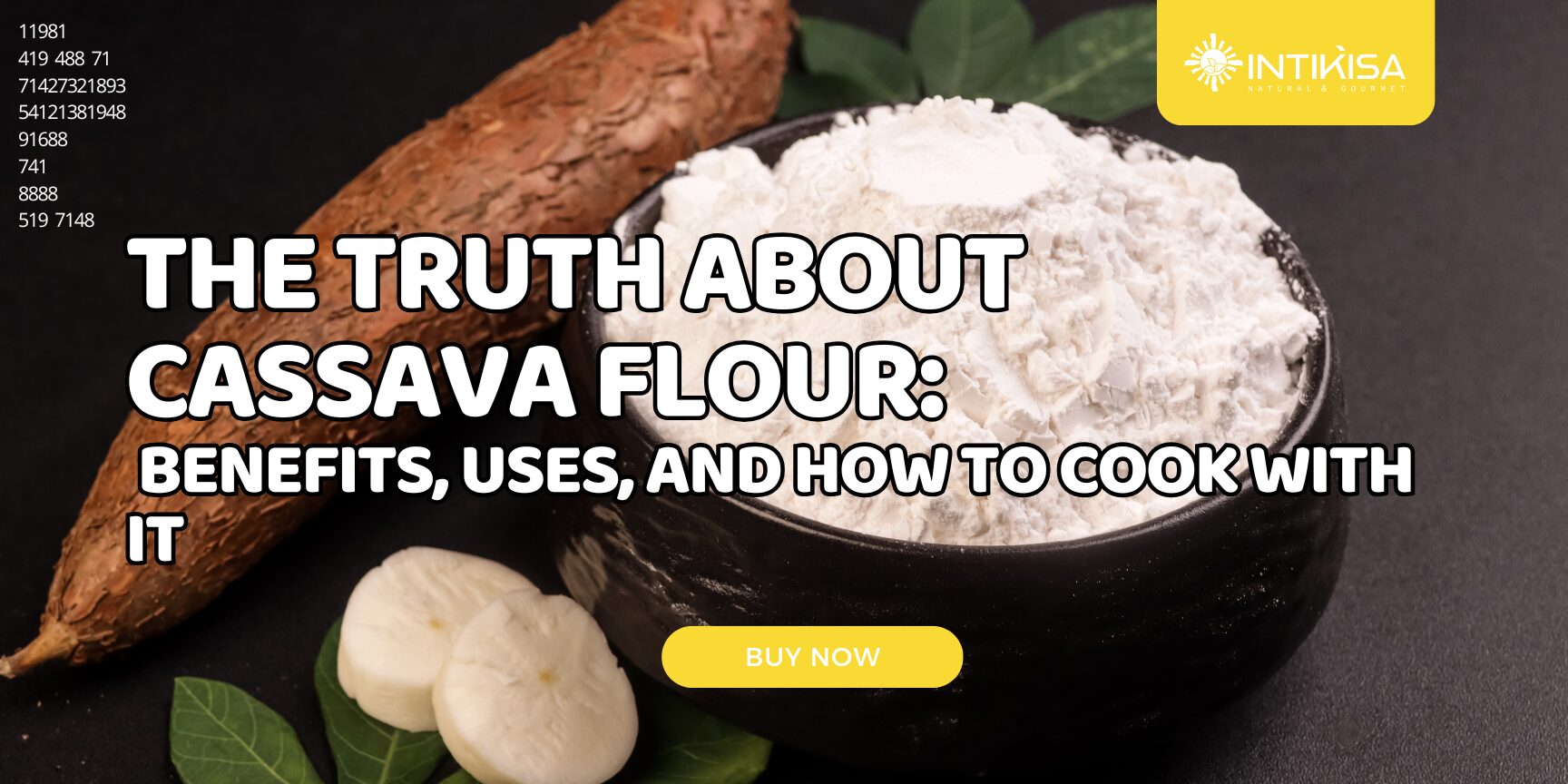
If you’re looking for a gluten-free alternative that preserves texture and flavor, cassava flour deserves a place in your pantry. Neutral in taste, highly versatile, and compatible with paleo or grain-free diets, its use has expanded rapidly in recent years. However, it is not the same as tapioca and it is not suitable for low-carb diets.
What Is Cassava Flour and What Is It Used For?

Cassava flour is made from the whole cassava root, which is peeled, dried, and finely ground. Because the entire root is used, it retains more fiber and nutrients than isolated starch.
It is commonly used for baking, tortillas, doughs, coatings, and for thickening soups and sauces. In many recipes, it works as a gluten-free alternative to wheat flour.
Key Difference: Cassava Flour vs. Tapioca
These terms should not be used interchangeably. Tapioca is the starch extracted from the cassava root, while cassava flour is made from the whole root.
As a result, cassava flour adds more structure and body to doughs, whereas tapioca is better suited for thickening and creating crispy or elastic textures.
Does Cassava Flour Contain Gluten? Is It Safe for Celiacs?
Cassava flour is naturally gluten-free and can be safe for people with celiac disease or gluten sensitivity, provided it is processed in facilities that prevent cross-contamination. Always check product labeling to confirm this.
Nutritional Value and Health Considerations
Cassava is primarily a source of complex carbohydrates and energy. Its protein content is relatively low compared to grains or legumes, but whole cassava flour retains fiber and some micronutrients.
Because it is high in carbohydrates, cassava flour may have a relatively high glycemic index depending on processing.
Which Diets Does It Fit?

Paleo or grain-free diets: generally accepted.
Keto or very low-carb diets: not recommended due to its carbohydrate content.
How to Use Cassava Flour (Practical Tips and Ratios)
Basic substitution: cassava flour can often replace wheat flour with adjustments. It absorbs more moisture, so additional liquid or fat is usually needed. A common starting point is using three-quarters to one cup per cup of wheat flour.
Baking: works well with eggs and fats; structure can be improved with xanthan gum.
Flatbreads and tortillas: performs very well on its own.
Frying and coatings: produces a crisp texture, especially when combined with a small amount of starch.
Quick Recipe Ideas
Gluten-free tortillas and wraps.
Savory fried or baked empanadas.
Gluten-free cookies and brownies with adjusted liquids.
Crispy coatings for fish or vegetables.
Where to Buy and Safety Considerations
Cassava flour is available in natural food stores and specialty supermarkets. When choosing a product, check for clear labeling, defined origin, and quality controls.
Some studies have raised concerns about potential heavy metal content in cassava-based products, so selecting brands with laboratory testing and traceability is recommended, particularly for frequent consumption.
Why Choose Intikisa Cassava Flour
Intikisa cassava flour is offered as a natural product with no additives and processed under quality controls designed for international markets. It is a reliable option for those seeking a gluten-free flour that performs well in baking, tortillas, and savory preparations.




 Spanish
  English